

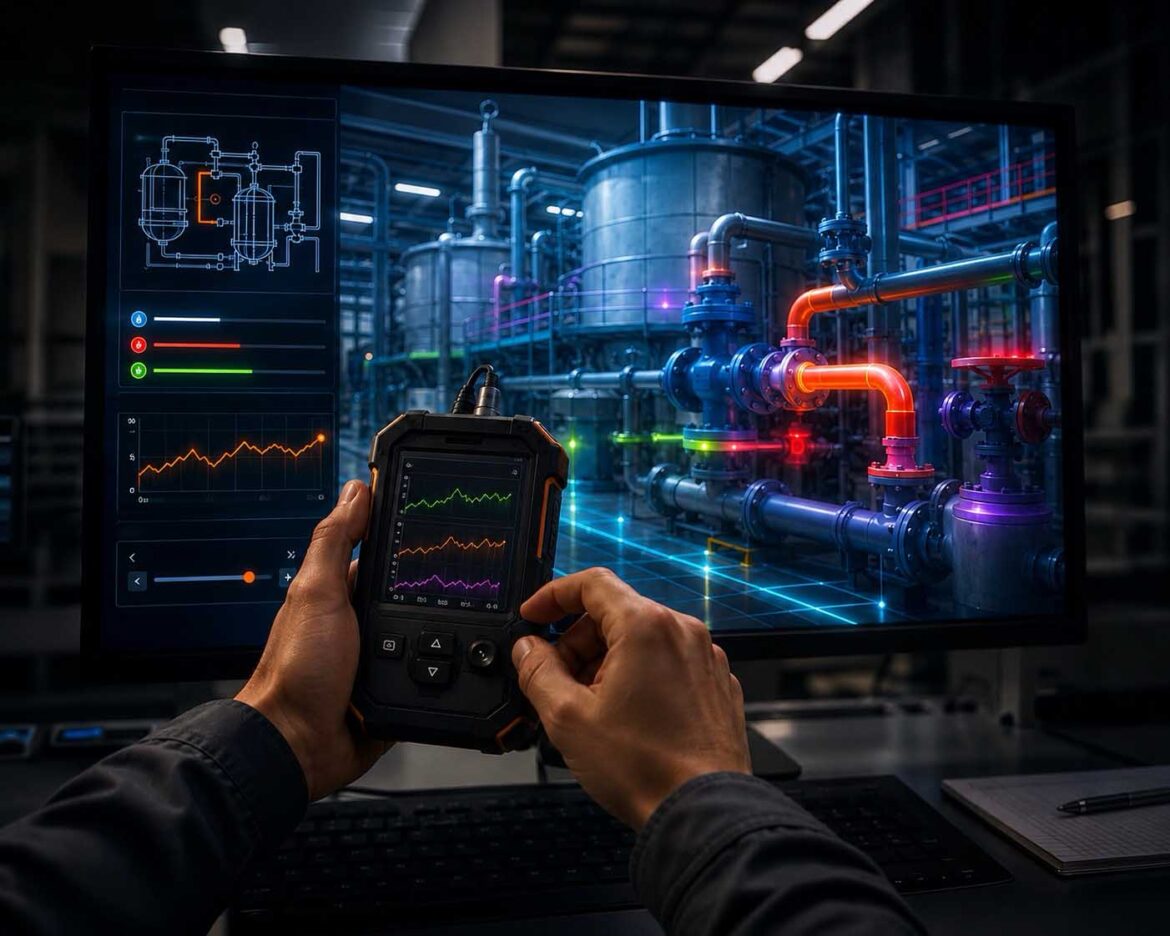
Netflix just showed how a real, fully functional device can become part of a digital story. For industrial gaming, the same idea can be taken further: real measuring devices that genuinely measure, just on a simulated facility.
Visualization: A real measuring device shows live pressure, temperature, and flow readings. The same values appear simultaneously on the corresponding industrial facility in the background | Image: © Ulrich Buckenlei | XR Stager Online Magazine | VISORIC GmbH
In June 2026, Night School Studio and Netflix Games released “Unhinged,” an interactive horror game that’s turning heads, though not for its graphics. Your own smartphone gets paired via QR code and takes on exactly the role it plays in real life: it actually rings when your character gets a call. It actually vibrates on an incoming message. Your real hand movement directly steers the movement in the game.[1] The device stays fully functional; only the values and events it responds to come from a simulated world.
That’s precisely the principle that could reshape serious gaming and industrial training in the coming years. Not virtually rebuilding a tool on a screen, but integrating the real tool itself, with full function, into a digital training environment. A measuring device that actually measures, just simulated values that exactly match the virtualized environment. A diagnostic device that actually displays diagnostics, just for a facility that doesn’t exist in that form.
For robotics, digital twins, and physical AI, this principle is no footnote from the entertainment industry. It shows exactly how the physical and digital worlds can interlock so that real devices keep their full function while the context they operate in is entirely simulated.
What stands out at Netflix as a clever game mechanic already exists in research and industry under other names, and it provides exactly the technical foundation industrial training has been looking for.
- Netflix’s “Unhinged” (Night School Studio) keeps the player’s real smartphone fully functional inside the game.
- The device rings, vibrates, and reacts for real, only the underlying events are simulated.
- The same principle transfers directly to real tools, measuring devices, and diagnostic equipment in training.
- The devices stay fully functional, only the context in which they measure or control is virtual.
- For industrial training, this approach promises noticeably better skill transfer into everyday work.
This article explains why real, fully functional devices are becoming the next evolutionary step as an input channel for serious gaming and industrial gaming, what research and practice already prove about it, where the limits lie, and what concrete advantages companies can draw from this merging of the physical and digital world.
From Touchscreen to Real Tool
Serious games and industrial training simulations originally grew out of classic video games, using the same input methods: keyboard, mouse, gamepad, later VR controllers and touchscreens. For plenty of learning content, that’s enough. But the moment hands-on skill, tool feel, or the precise handling of real devices takes center stage, that abstraction becomes a problem.
A technician learning to close a valve to a specific torque develops a different sense of motion on a virtual controller than on the real tool. The simulation might look convincing, but the motor learning happens on the wrong object. That exact disconnect between digital practice and real-world application has long been considered one of the biggest weaknesses of classic simulations in training research.
“Unhinged” makes this disconnect visible in an entertaining way, by showing what it looks like when it’s resolved: the device isn’t rebuilt, it stays real and fully functional, only the world it operates in is simulated. The character moves a flashlight exactly as the player moves their own phone. An incoming call in the game actually rings the player’s real phone.[1] Apply this same principle to a real tool instead of a smartphone, and you get exactly the kind of training classic simulations couldn’t deliver before: the tool works just like in real life, only the facility behind it exists purely virtually.
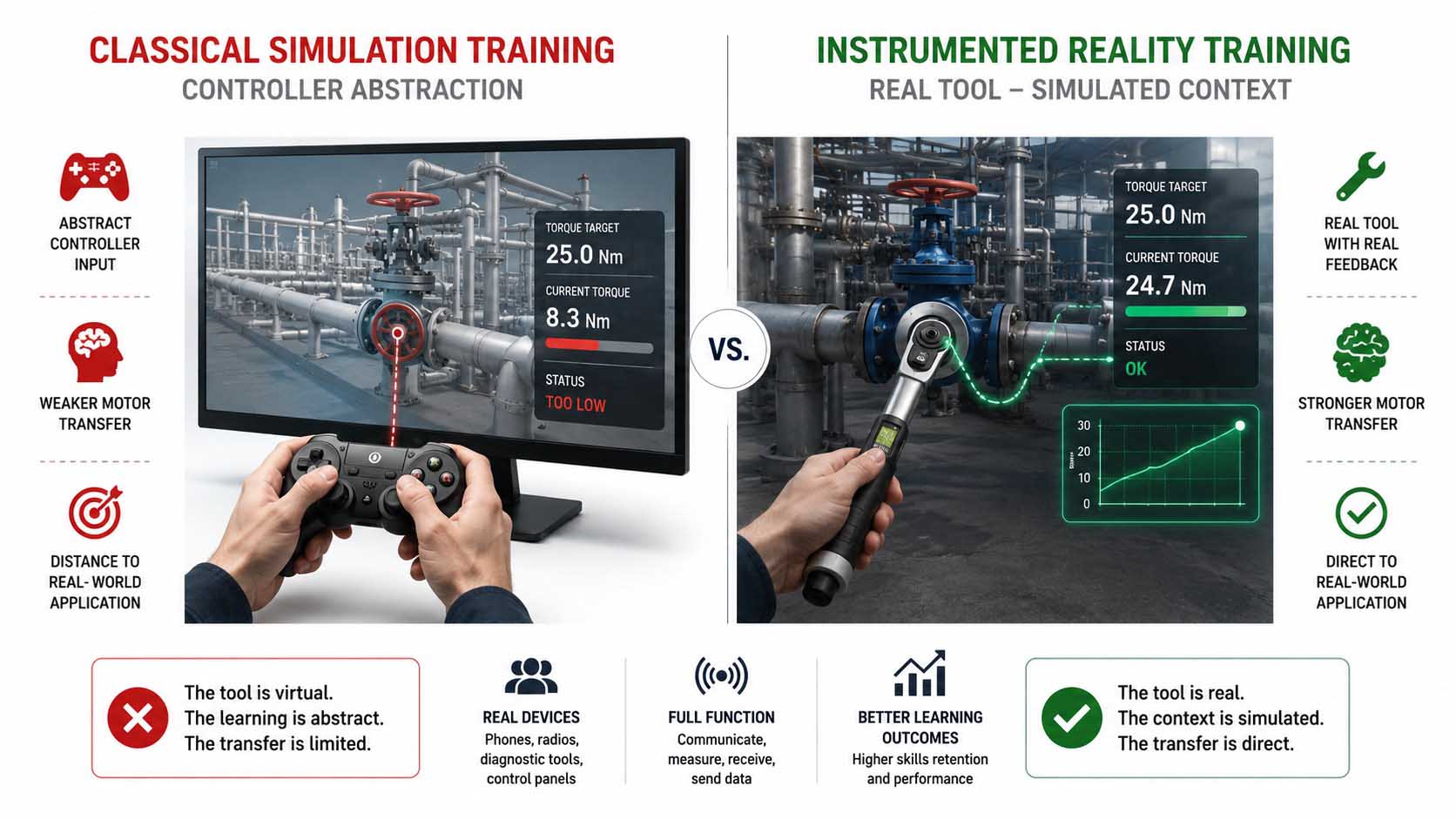
Classic training simulations recreate real tools through abstract controllers. When the real tool itself stays fully functional and only the context is simulated, the gap between practice and real-world application disappears.
Infographic: From controller abstraction to direct integration of fully functional real tools into the training simulation | Graphic: © Ulrich Buckenlei | XR Stager Online Magazine | VISORIC GmbH
This shift isn’t limited to craft and technical skill. Communication, teamwork, and decision-making can also be trained more realistically when the tools people actually use every day, phone, radio, diagnostic device, control panel, keep their full function instead of being replaced by a single, unified virtual interface.
That fundamentally raises the bar for modern training systems. It’s no longer enough to convincingly simulate an environment. The simulation has to treat real devices for what they are: standalone, fully functional interfaces that genuinely receive, measure, or send data, just from within a virtual world.
- Classic training simulations replace real tools with abstracted controller inputs.
- Motor learning on virtual controllers transfers less effectively to handling the real tool.
- “Unhinged” shows how a real device stays fully functional while the context around it is simulated.
- Communication tools like phones or radios can also be integrated with full function.
- Modern training systems must treat real devices as functional interfaces, not just recreate them.
That real, fully functional devices make a measurable difference in training isn’t mere speculation. Why this shift is grounded in learning psychology, and what current research shows, is the subject of the next chapter.
Why Real Input Devices Are Psychologically Superior for Learning
That real movements and real tools improve learning isn’t a new idea, VR research has described this effect for years under the term embodied cognition: people who interact with virtual or real objects through natural movement and realistic handling anchor what they learn more deeply than those who merely watch or click abstractly.[2]
A recent study on VR-based manufacturing training shows this concretely: trainees who could grab, rotate, and position objects with natural hand movements, instead of selecting them from a menu, developed both better technical skill and stronger situational awareness for real work processes. The researchers explicitly attribute this effect to the realistic recreation of actual object handling.[3]
The same pattern shows up outside manufacturing too. A study on basic life support training combined VR simulation with a system measuring brain activity and found that as learning outcomes improved, cognitive load in the prefrontal cortex measurably decreased while practical performance simultaneously increased, a sign that more realistic, physically grounded training speeds up skill automation.[4] Research on haptic feedback in complex decision-making simulations further confirms that real sensory feedback demonstrably improves decision quality under pressure.[5]
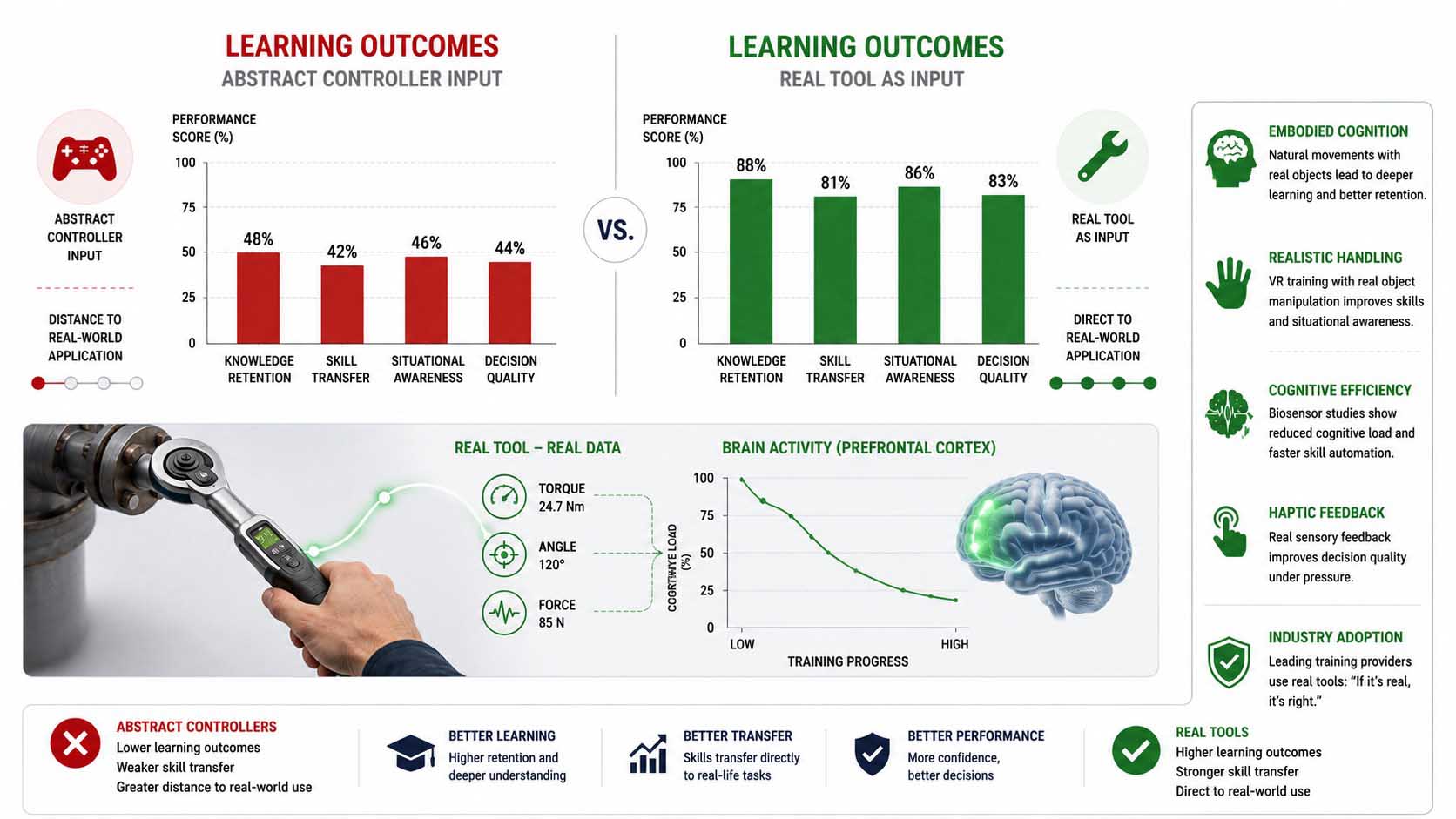
Research on embodied cognition, manufacturing training, and decision-making simulations consistently shows: real movements and real tools as input improve learning outcomes, skill transfer, and decision quality compared to abstract controllers.
Infographic: Learning-psychology benefits of real devices over abstracted training controllers | Graphic: © Ulrich Buckenlei | XR Stager Online Magazine | VISORIC GmbH
These results explain why professional training providers are increasingly moving away from pure controller-based control. A particularly consistent example comes from the US provider Serious Simulations, whose training systems use sensor-equipped sleeves that snap directly onto real or convincingly realistic training weapons and capture their use in real time, following the company’s own guiding principle: “If it’s real, it’s right.”[6]
The common thread across all these approaches: the closer the physical interaction in training sits to real tool use, the more directly what’s learned transfers into actual daily work. This principle can be systematically built into digital twins that feed real device data live into a training simulation. How that works technically is the subject of the next chapter.
- Embodied cognition research shows: natural movements with real objects anchor learning content more deeply.
- VR manufacturing training with realistic object handling improves technical skill and situational awareness.
- Biosensor studies on basic life support training show faster automation of skills.
- Haptic feedback demonstrably improves decision quality in complex training scenarios.
- Professional training providers are increasingly shifting toward real instead of abstracted input devices.
Digital Twins Become the Training Stage
For a real device to actually feed into a training simulation as input, more than a good idea is needed. It takes a technical bridge that connects real sensor data to a digital model in real time, exactly the job digital twins already handle in industry today.
A recent research project shows this bridge concretely: through an Arduino-based acquisition module and a custom-built control script, real sensor data is fed in real time into a RoboDK simulation environment for industrial robotics applications. Instead of predefined, simulated signals, the simulation responds dynamically to actual physical measurements, with an average end-to-end latency of just 23.97 milliseconds.[7]
For training applications, this principle means: a real measuring device, diagnostic tool, or control panel doesn’t just deliver motion data, it delivers real physical readings, temperature, pressure, torque, directly to the simulation. The training scene doesn’t respond to a script, it responds to what the learner actually measures, adjusts, or triggers.
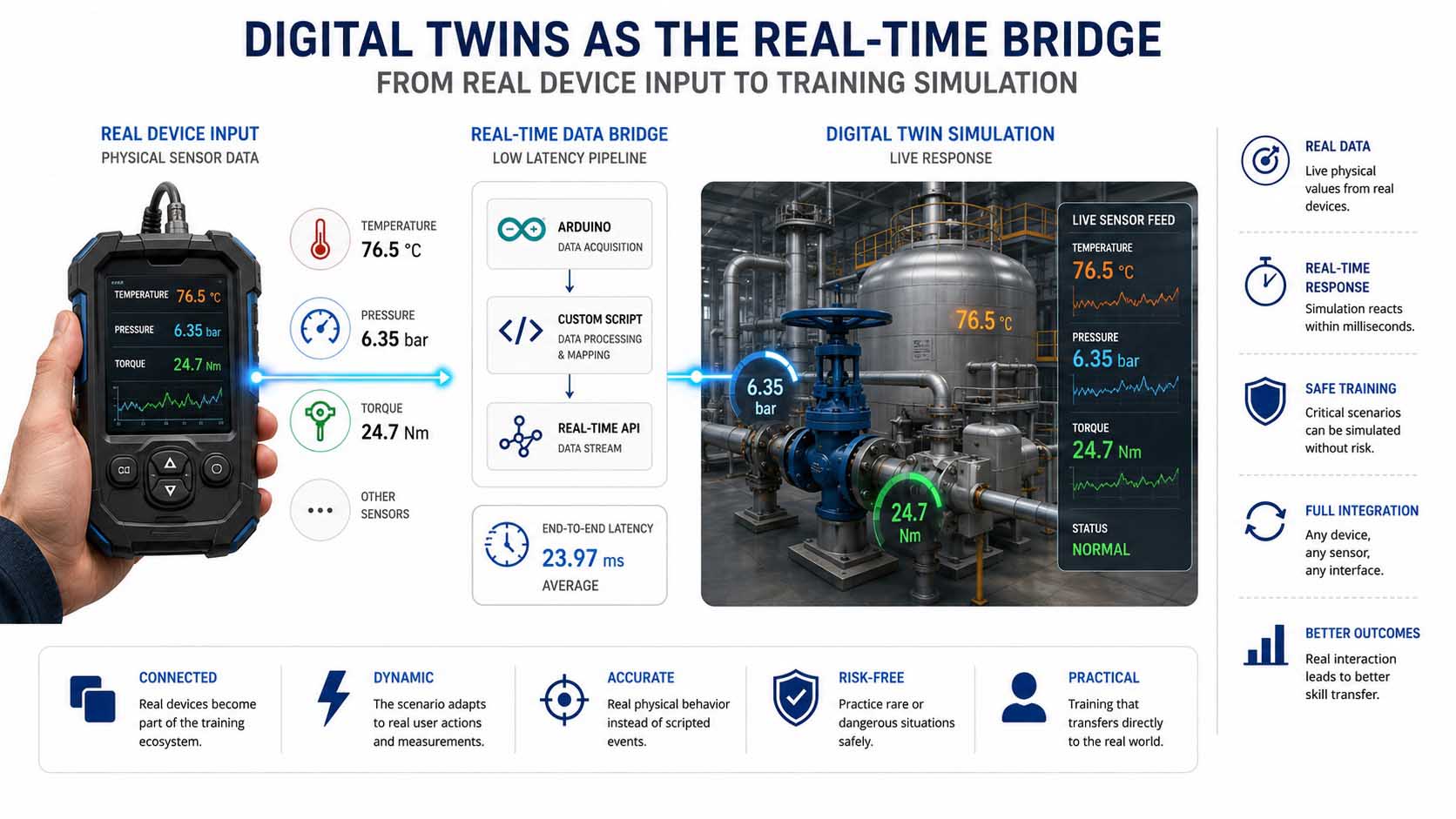
Digital twins connect real sensor data with a running training scenario. Instead of pre-scripted events, the simulation responds directly to what a real device actually measures or triggers.
Infographic: Digital twins as a real-time bridge between real devices and industrial training simulation | Graphic: © Ulrich Buckenlei | XR Stager Online Magazine | VISORIC GmbH
That turns the digital twin into more than just a facility’s likeness, it becomes the training stage itself. A new employee can practice on a real control panel while the simulation generates dangerous, expensive, or rare operating conditions in the background, without the real facility ever having to enter a critical state.
This principle carries over directly to serious gaming applications. Instead of merely staging a training scene, it becomes a living system that continuously responds to real inputs, exactly the way a digital twin responds to real operating data.
- Digital twins connect real sensor data to a running simulation in real time.
- Research shows end-to-end latencies under 25 milliseconds between real sensor and simulation.
- Real measuring devices deliver physical readings, not just motion data, to the training scene.
- Training scenarios respond to actual user behavior instead of a fixed script.
- Dangerous or expensive operating states can be safely simulated without endangering the real facility.
As convincing as this merger sounds, it’s no automatic win. Not every real device improves training on its own, and poorly integrated controls can achieve the opposite. Where those limits lie is the subject of the next chapter.
Where Simple Screen-Based Controls Fall Short
A training simulation can look as realistic as you like, if its controls don’t match the actual task, a critical disconnect sets in. Steering an industrial process through a gamepad, mouse, or abstract on-screen menus trains the right situation, but executes it through an interaction that has little in common with the later real-world workflow.
The same problem shows up in interactive entertainment formats too. Netflix’s “Bandersnatch” made it clear early on that even a compelling interactive concept can lose impact if the controls feel clunky or distracting. The moment users engage more with the interface than with the actual task, the controls themselves become the obstacle.
For serious gaming and industrial training simulations, this effect matters a great deal. A technician who adjusts a valve with a torque tool on the job shouldn’t ideally recreate that process in training via a controller. A physical training model with a real or realistic valve and the same tool used in the actual work process makes far more sense.
The key difference lies in the connection to the simulation. Sensors on the tool or training model capture, for example, torque, valve position, or other physical states. An interface transmits that data to the computer, where the virtual facility responds immediately to the real action. Readings appear where they belong: inside the on-screen interface. The physical action, meanwhile, takes place on the real training model.
A patent on integrating real, non-virtual controls into VR training simulators describes a comparable requirement: physical controls must be spatially correctly embedded and visually synchronized with the trainee’s actual hand movements. If real action and virtual response don’t line up, confusion sets in instead of immersion.[8]
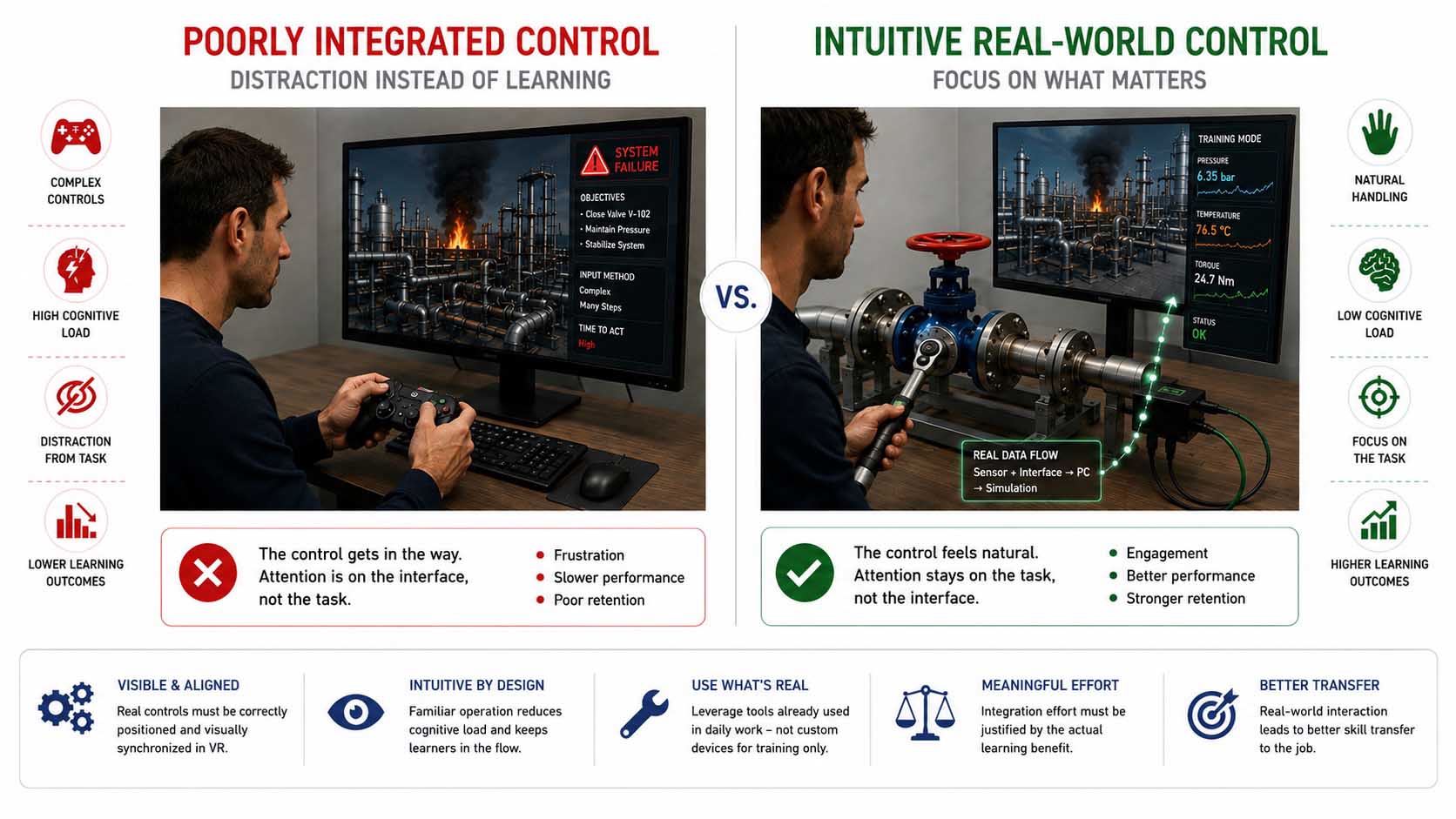
Intuitive training control connects real action and virtual response. The technician works with a familiar tool on a physical facility model, while sensor and control values are transmitted to the simulation in real time and change the state of the virtual facility.
Infographic: From abstract screen-based control to intuitive real-time connection between real tool, physical training model, and digital simulation | Graphic: © Ulrich Buckenlei | XR Stager Online Magazine | VISORIC GmbH
This creates a closed interaction loop: the learner acts on the real object, sensors capture the action, the simulation processes the data, and the consequences show up immediately. Open a valve, or tighten it to a specific torque, and the corresponding state of the virtual facility changes accordingly. Conversely, the simulation can present new operating conditions, readings, or tasks that the learner must then respond to using the real tool.
What matters, though, is that not every physical device automatically leads to better training. Tools and controls that are already part of everyday work, diagnostic devices, measuring instruments, switches, control panels, tend to integrate seamlessly. Devices that would need to be specially built or heavily modified purely for the simulation quickly flip the original advantage into a drawback: high effort for little added learning benefit.
Integrating real devices is therefore not an end in itself. Its value emerges where the technical interface becomes as invisible as possible and the learner can focus entirely on the actual task. Good training systems don’t leave the user thinking about the controls, they leave them thinking about the process they’re meant to learn.
- Abstract controllers can only partially capture the handling of real tools.
- Physical training models enable natural actions with familiar tools and controls.
- Sensors and interfaces transmit real measurement and control values to the simulation in real time.
- The virtual facility responds immediately to real actions, while readings appear on screen.
- The greatest value emerges when the technical integration stays invisible and attention stays on the training task.
This also clarifies where this approach pays off most: anywhere tool handling, process understanding, and the immediate consequences of an action need to be trained together. Which industries already benefit most from this today is the subject of the next chapter.
A Technology for Maintenance, Safety, and Industrial Training
Once it’s clear where real device integration actually makes a difference, its value becomes easy to place: anywhere handling skill, reaction ability, or decision-making need to be trained under realistic conditions, but the real environment is too dangerous, too expensive, or too rarely available.
In safety training, the provider Serious Simulations already deploys sensor-equipped training weapons that capture real usage data in real time and feed it into VR training scenarios for police and military, an approach that makes tactical behavior trainable under realistic physical strain, without live ammunition or real danger.[6]
In disaster response, the Sidh project from the University of Skövde and the Swedish Civil Contingencies Agency shows how accelerometers on firefighters’ boots steer their movement in a CAVE environment while they train with real protective gear and breathing apparatus, for rescue scenarios that would be nearly impossible to safely recreate in reality.[9]
In the medical field, basic life support training already pairs real resuscitation manikins with biometric sensors to make learning progress objectively measurable, instead of relying purely on subjective assessment.[4] In industrial manufacturing, realistic object handling in VR training demonstrably improves both technical skill and situational awareness for real work processes.[3]
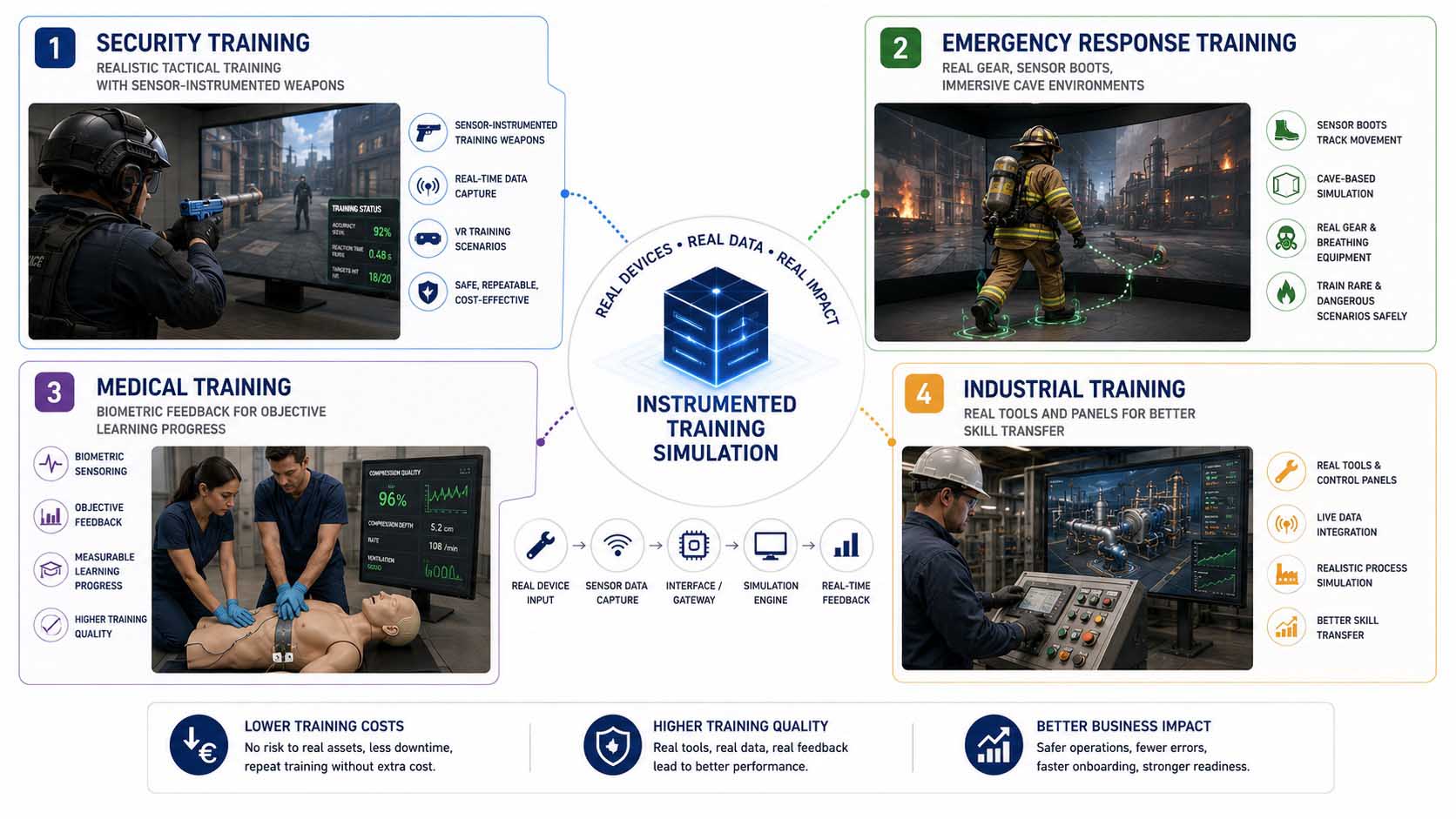
Real device integration is already in use across industries: from safety training to disaster response, medical education, and industrial manufacturing.
Infographic: Application fields for real device integration in safety, disaster response, medical, and industrial training | Graphic: © Ulrich Buckenlei | XR Stager Online Magazine | VISORIC GmbH
What all these applications share is a central economic advantage: training costs drop because real facilities don’t need to be blocked or put at risk for practice purposes, while training quality rises at the same time because real tools are used instead of abstracted controllers. For companies with heavy training demands, maintenance teams, service technicians, or safety-critical staff, that’s a double win.
This range of applications also shows just how young this field still is. There’s no dominant standard, no unified platform, just many pioneers each building their own solutions for their specific needs. What that means for companies looking to invest in this direction themselves is the subject of the next chapter.
- Safety training uses sensor-equipped real training weapons for realistic tactical behavior.
- Disaster response combines real protective gear with sensor-driven CAVE simulation.
- Medical training uses biometric sensors for objective measurement of learning progress.
- Industrial manufacturing benefits from realistic object handling for skill transfer into everyday work.
- Real device integration lowers training costs while simultaneously improving training quality.
When People Collaborate Within Training
Real devices are one building block of instrumented training simulations. The second, often underrated building block is real people. Classic simulations usually replace experienced colleagues, supervisors, or remote experts with scripted, pre-recorded characters, a compromise that costs authenticity.
This is exactly where an obvious extension opens up: instead of scripting a character, a real supervisor, service technician, or remote expert can actually become part of the training scenario through calls, messages, or live decisions. Technical skill, communication, and teamwork can then be trained together within the same exercise, instead of being handled separately.
For maintenance and service teams, this is especially valuable. A trainee can operate a real diagnostic device on a simulated facility while an experienced technician answers questions or demands decisions over a live call, exactly the process that plays out in real everyday work, just without the risk of a real mistake.
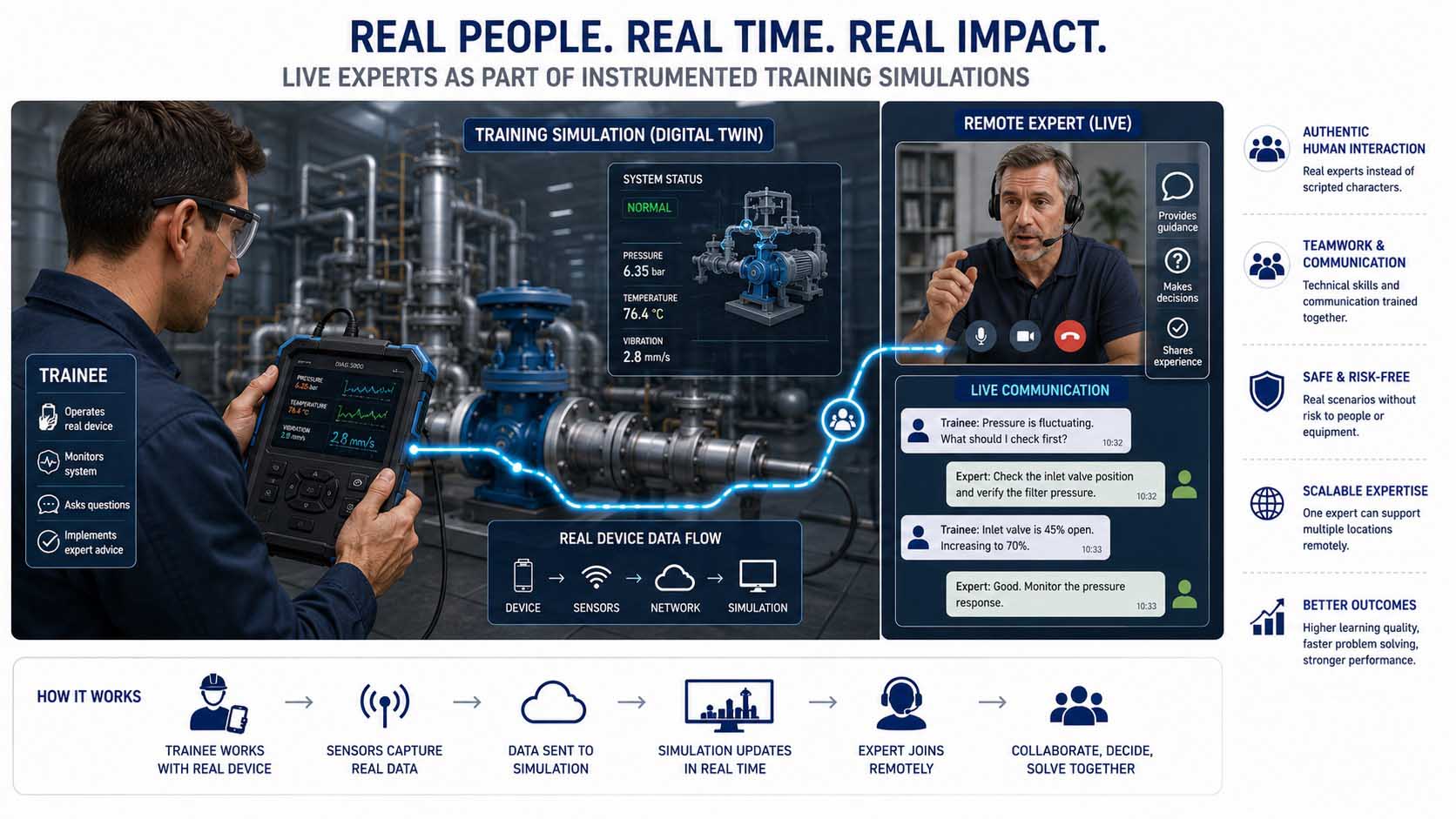
Real remote experts, brought live into a training scenario via call or message, replace scripted characters with authentic human interaction, combined with real device handling.
Infographic: Live-integrated remote experts as a collaborative building block of instrumented training simulations | Graphic: © Ulrich Buckenlei | XR Stager Online Magazine | VISORIC GmbH
This principle works so well precisely because it follows the same logic as integrating real devices: the simulation isn’t meant to recreate reality as closely as possible, real elements are brought in wherever they make the biggest difference, for tools just as much as for people.
For companies with distributed teams or scarce specialist knowledge, this opens up new possibilities: a single experienced expert can support multiple training scenarios across different locations without needing to be physically present, a model that scales training capacity without losing quality.
- Real supervisors or remote experts can be brought live, rather than scripted, into training scenarios.
- Technical skill, communication, and teamwork can be trained together as a result.
- Live interaction with real colleagues increases authenticity without real-world risk.
- The same integration principle applies equally to real devices and real people.
- The specialist knowledge of individual experts becomes scalable across multiple locations.
Real devices and real people as part of the simulation, this field is still technically and conceptually in its early stages. Why that’s an opportunity rather than a hurdle for companies is the subject of the next chapter.
Why This Merger Is Still Just Getting Started
Unlike established technologies such as classic VR training, there’s no dominant standard and no unified platform yet for integrating real devices into serious gaming. What exists are individual, often highly specialized pioneer solutions: sensor-equipped training weapons for security agencies, sensor boots for disaster-response simulations, biometric systems for medical training, real-time sensor bridges for industrial digital twins.
This diversity isn’t a sign of immaturity, it’s typical of a field developing from several directions at once: research institutions are studying the underlying learning psychology, entertainment studios like Night School Studio are demonstrating mass-market implementations, and security agencies and industrial companies are building highly specialized solutions for their own specific needs.[6][7]
For companies, that means both opportunity and challenge at once. There’s no off-the-shelf standard product to simply buy. Instead, every project needs a tailored combination of real device selection, sensor integration, digital-twin connectivity, and thoughtful scenario design, matched to a company’s specific tools, processes, and safety requirements.
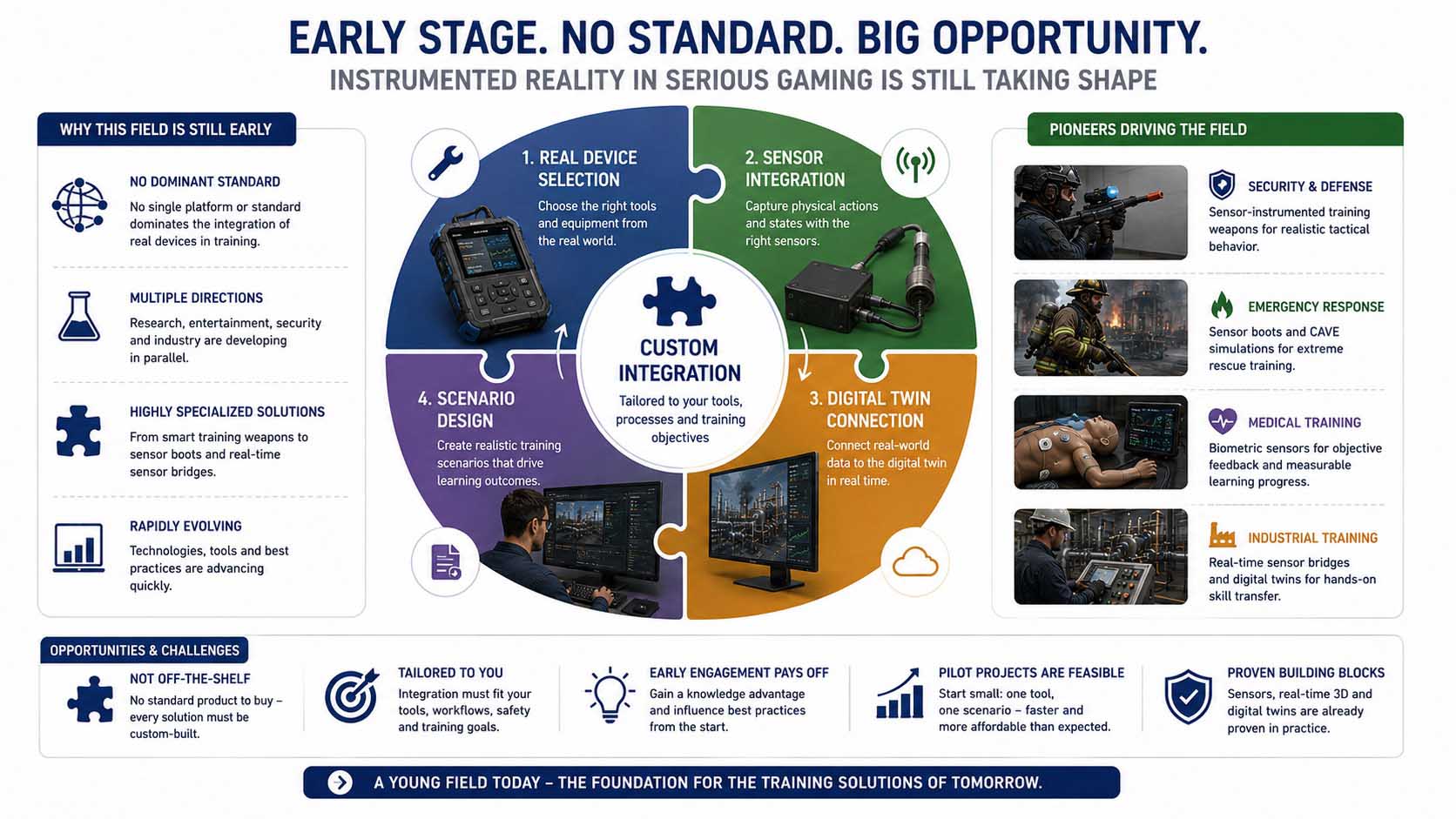
Unlike standardized VR training systems, integrating real devices requires an individually matched combination of hardware, sensors, digital-twin connectivity, and scenario design.
Infographic: Building blocks of a tailored integration of real devices into serious-gaming training systems | Graphic: © Ulrich Buckenlei | XR Stager Online Magazine | VISORIC GmbH
This exact individuality is what makes early engagement valuable. Companies investing now in tailored, device-based training systems don’t just secure an immediate training advantage, they also gain a knowledge edge in a field that will noticeably professionalize over the coming years.
A well-thought-out pilot project, a single tool, a single scenario, can often be implemented faster and more cost-effectively than many companies expect, precisely because the building blocks, real sensors, digital twins, real-time 3D, have already been individually proven in practice and just need to be combined precisely.
- No dominant standard yet exists for integrating real devices into serious gaming.
- Current solutions are highly specialized pioneer projects from research, entertainment, and industry.
- Every project needs a tailored combination of hardware, sensors, and scenario design.
- Early engagement secures companies a knowledge and training advantage.
- Individual, clearly scoped pilot projects can often be implemented faster than expected.
This early market stage is exactly why it’s worth taking a closer look at the bigger picture now. How instrumented reality fits into the broader development of spatial computing and physical AI is the subject of the final chapter.
Instrumented Reality as the Next Stage of Industrial Gaming
The previous chapters have shown how real devices, real sensor data, and real people become building blocks of modern training simulations. Together, these building blocks form a principle that reaches beyond individual applications: instead of merely simulating an environment, the real world itself gets instrumented and fed directly into the simulation.
This principle fits seamlessly into a larger development already visible across previous articles in this series. Persistent object recognition gives robots a memory for objects. Streaming 3D reconstruction gives systems a memory for space. Instrumented training simulations give learning environments a direct, living relationship to physical reality, instead of merely recreating it.
For companies investing in professional development, onboarding, or safety-critical training, this leads to a clear strategic conclusion. Training systems that don’t incorporate real devices and real people will eventually hit a wall when it comes to genuine hands-on competence rather than pure knowledge transfer. Systems built from the ground up around instrumented reality are designed for exactly that standard.
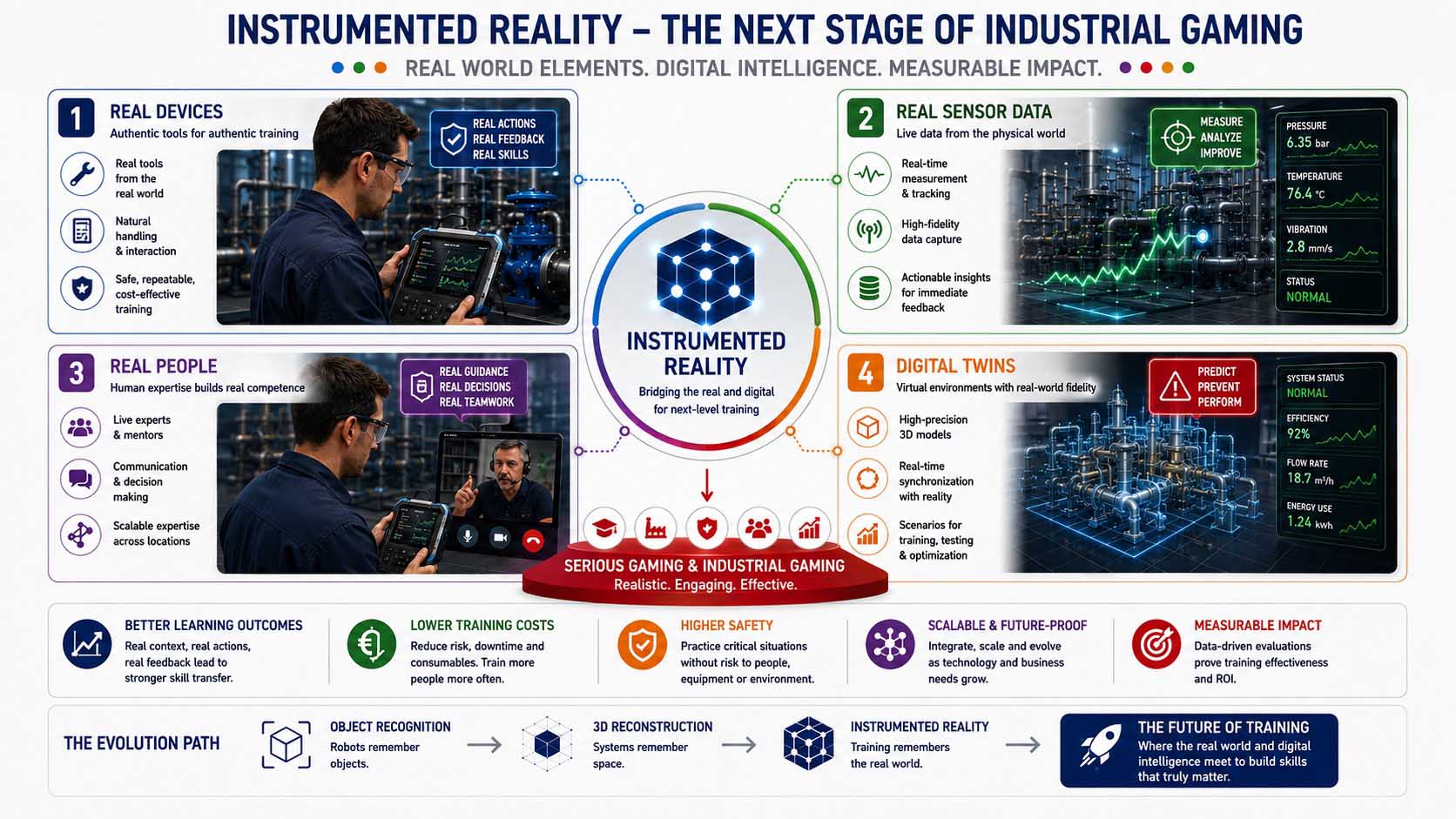
Real devices, real sensor data, and real people merge into instrumented reality, the shared principle behind the next generation of serious gaming and industrial gaming.
Infographic: Instrumented reality as the foundational principle of the next generation of serious gaming and industrial gaming | Graphic: © Ulrich Buckenlei | XR Stager Online Magazine | VISORIC GmbH
Research and early pioneer projects show that this principle is already technically feasible, backed by learning-psychology evidence, and successfully deployed in individual industries today. The path from isolated pioneer solutions to tailored, company-wide training systems is, for companies that act now, considerably shorter than it might first appear.
- Instrumented reality connects real devices, real sensor data, and real people with the simulation.
- This principle complements persistent object recognition and streaming 3D reconstruction with the training dimension.
- Training systems without real device integration hit limits when it comes to genuine hands-on competence.
- The principle is already technically feasible and successfully proven in individual industries today.
- For companies that act now, the path to tailored solutions is short.
This brings the article full circle. What starts with a smartphone as a game controller is turning into a foundational principle for the next generation of serious gaming and industrial gaming. Just how convincing this principle already is becomes clear in the following video.
When Your Own Device Becomes Part of the Story
The previous chapters have shown how real devices, real sensor data, and real people combine into instrumented training simulations. Just how convincing this principle already is in entertainment becomes most obvious in a current, widely available example.
The following video shows clips from “Unhinged,” the interactive horror game released by Night School Studio and Netflix Games in June 2026. You can see how the player’s QR-code-paired smartphone serves as a motion-tracked flashlight, while incoming calls and messages genuinely run through the player’s own phone, not a simulated call, but an actual ring, an actual vibration.[1]
Particularly telling is the moment when the player’s real hand movement is translated directly onto the character’s movement. That exact principle, real motion as a direct input channel instead of abstracted controller input, is what could fundamentally reshape industrial training in the years ahead.
Video: Real device integration as demonstrated by “Unhinged” | Visuals by original creators Night School Studio, Netflix Games | Analysis, script, editing, and video production: © Ulrich Buckenlei | XR Stager Online Magazine | VISORIC GmbH
The video makes clear that real device integration isn’t some distant future concept, it already works today, at mass-market scale, using a device everyone already has in hand. For companies considering training simulations with real tool integration, this example vividly shows just how convincing and accessible this principle already is.
At the same time, the video reveals the key conceptual difference: it’s not the graphical quality of the simulation that excites players, it’s the fact that their own real device genuinely becomes part of the story. That exact sense of real involvement is what can fundamentally improve industrial training too.
- The video shows “Unhinged,” a real example of smartphone device integration released in June 2026.
- Incoming calls and messages genuinely run through the player’s own phone.
- Real hand movements are translated directly onto the character, with no controller abstraction.
- The principle already works at mass-market scale, using a device everyone owns.
- What matters is the sense of real involvement, not the simulation’s raw graphical quality.
This example makes tangible where serious gaming and industrial gaming are heading: from pure observation to genuine, felt involvement, using tools people already know from their real working lives.
From Idea to Tailored Industrial Gaming Project
Instrumented training simulations don’t come from a single tool or a single platform, they come from the precise interplay of real device selection, sensor integration, digital twin technology, and thoughtful scenario design. That exact combination sits at the core of what VISORIC builds for its clients.
The expert team at VISORIC GmbH in Munich combines over 15 years of experience in 3D, AI, and XR with hands-on expertise in digital twins, real-time 3D, and sensor integration, exactly the building blocks a convincing, device-based training system needs. Whether it’s a real diagnostic device, a control panel, or a maintenance tool becoming the input, VISORIC builds the technical bridge between real hardware and the digital training scene, tailored to a company’s actual tools and processes.
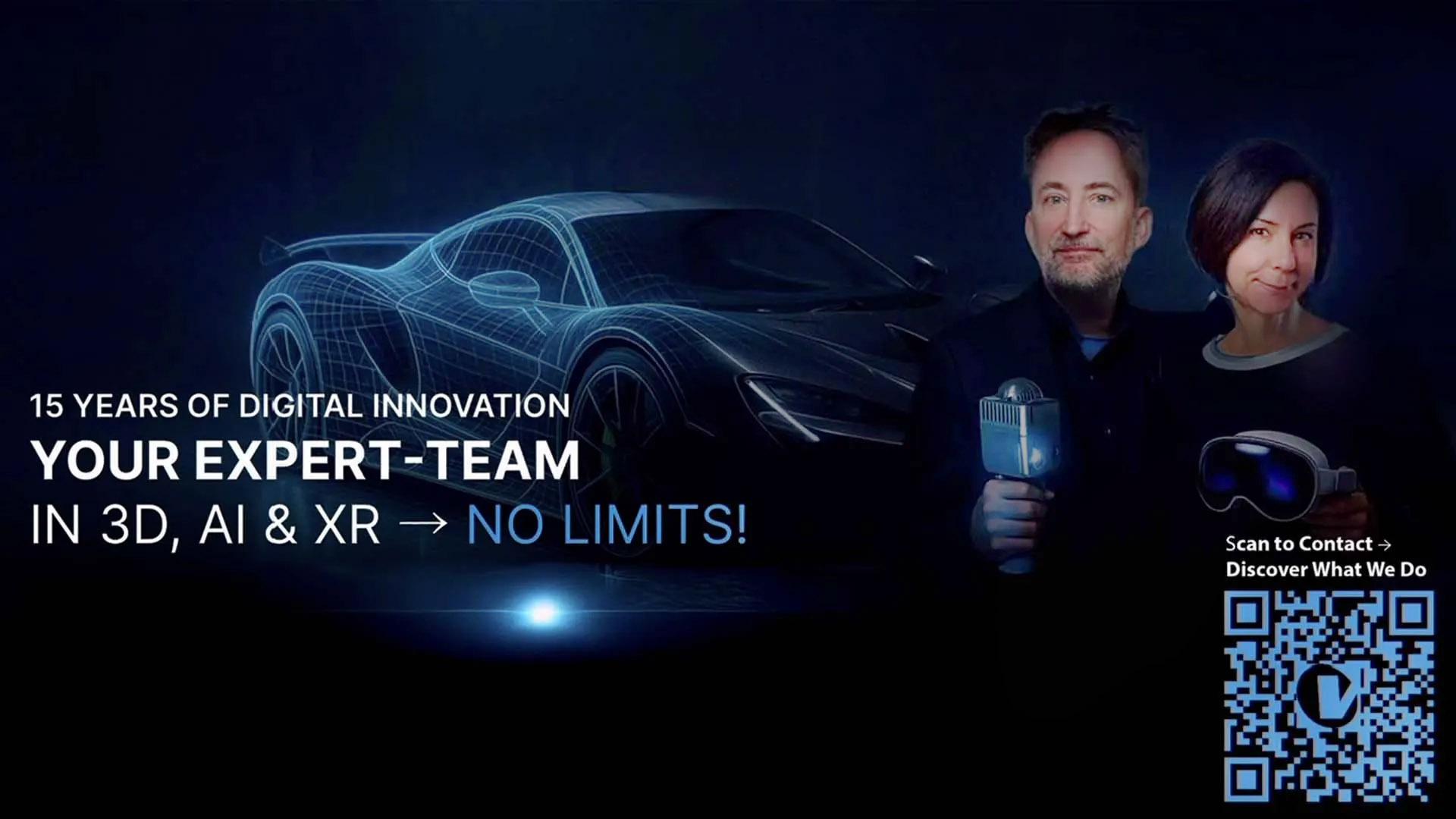
15 years of experience in 3D, AI, and XR: the VISORIC expert team from Munich.
Image: © Ulrich Buckenlei | XR Stager Online Magazine | VISORIC GmbH
A well-thought-out pilot project, a single real tool, a single training scenario, can often be realized considerably faster and more cost-effectively than many companies expect. VISORIC guides that journey from the first concept idea, through technical integration, to a deployment-ready, company-wide training solution.
- Concept development and implementation of serious-gaming and industrial-gaming solutions with real device integration.
- Technical connection of real tools, sensors, and control panels to digital twins and training scenes.
- From the first pilot application to a scalable, company-wide training solution.
Want to integrate real tools, sensors, or expert staff into your own training simulation and train your team in a noticeably more hands-on way?
Talk to the VISORIC expert team from Munich about serious gaming, industrial gaming, digital twins, and modern spatial computing platforms. Together, we’ll turn your real tool, your facility, or your training needs into a tailored, ready-to-deploy training system, with a noticeable edge in onboarding, maintenance, and safety-critical qualification.
Contact:
Email: info@visoric.com
Phone: +49 89 21552678
Sources and References
- Netflix / Night School Studio. Unhinged Game — Everything You Need to Know. Netflix Tudum, June 2026.
- Overview studies on embodied cognition in VR-based training.
- Enhancing Manufacturing Training Through VR Simulations. arXiv:2507.21070.
- Performance Monitoring via Functional Near Infrared Spectroscopy for Virtual Reality Based Basic Life Support Training. PMC6920174.
- Evaluating the Efficacy of Haptic Feedback and Treadmill-Integrated VR on Decision-Making Performance in Complex Simulation. arXiv:2404.09147.
- Serious Simulations. Sensor-equipped training weapons and professional VR training systems for security agencies. Innovations of the World, company profile.
- Integration of Real Signals Acquired Through External Sensors into RoboDK Simulation of Robotic Industrial Applications. PMC11902446.
- Integrating Tactile Nonvirtual Controls in a Virtual Reality Training Simulator. US Patent 11797093.
- A Review on Serious Games for Disaster Relief. Sidh project, University of Skövde and Swedish Civil Contingencies Agency, arXiv:2201.06916.
- Netflix / Night School Studio. Unhinged, interactive horror game with smartphone device integration, released June 30, 2026.
- VISORIC practice projects in serious gaming, digital twins, real-time 3D, and spatial computing.
- XR Stager platform for real-time 3D, digital twins, knowledge AI, and industrial spatial computing applications.
Contact Persons:
Ulrich Buckenlei (Creative Director)
Mobile: +49 152 53532871
Email: ulrich.buckenlei@visoric.com
Nataliya Daniltseva (Project Manager)
Mobile: +49 176 72805705
Email: nataliya.daniltseva@visoric.com
Address:
VISORIC GmbH
Bayerstraße 13
D-80335 Munich