

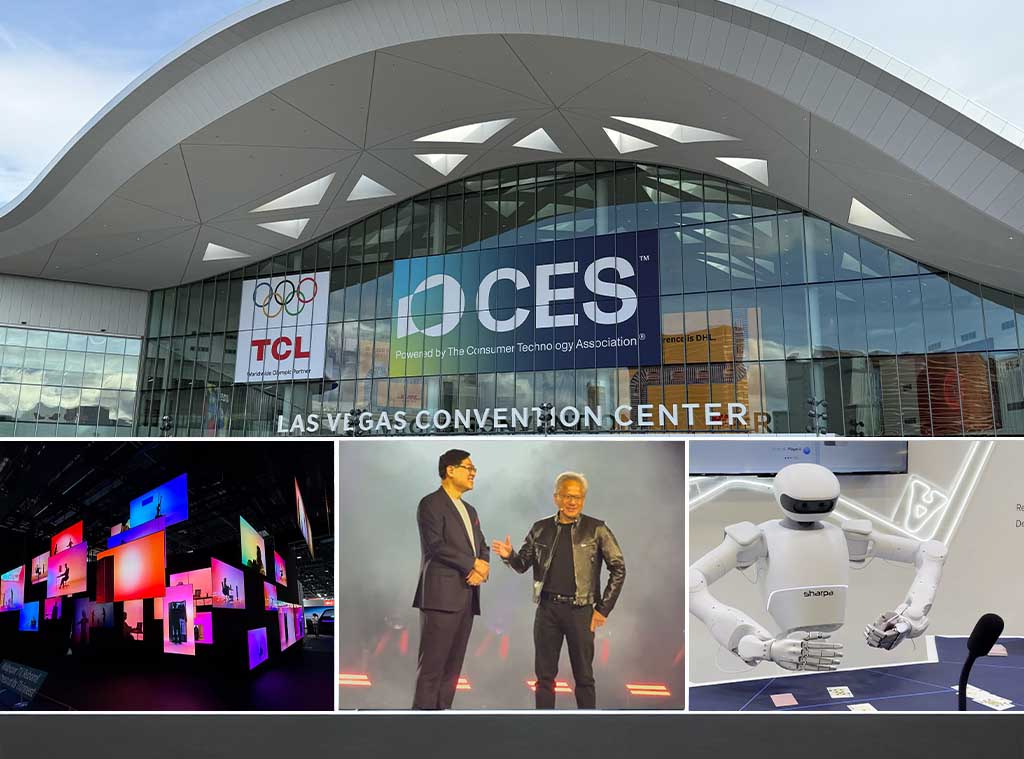
CES 2026 as a mirror of technological change: In Las Vegas, it became clear how artificial intelligence is evolving from a purely software-driven topic into a physically effective foundation, simultaneously transforming industry, mobility, and everyday life.
Photo: Ulrich Buckenlei | Visoric 2026
Why AI becomes physically effective in 2026
In many discussions over recent years, AI was primarily associated with language, text, and software. At CES 2026, a different focus emerged. AI is moving closer to the real world because it is increasingly being applied where decisions have consequences and processes take place in physical space. This affects factories, supply chains, mobility, and devices people use every day.
What matters most is not the individual algorithm, but the interaction between data, models, sensor technology, and the physical environment. AI becomes a layer that observes, evaluates, and provides recommendations for action, often in real time. This trend is frequently referred to in the professional community as Physical AI, meaning AI that does not only analyze, but actively interacts with the physical world.
- Into the real world → AI becomes relevant where machines, people, and processes are connected.
- From features to impact → The decisive factor is measurable value within the process, not the demo effect.
- From novelty to infrastructure → AI evolves into a foundational layer on which industries and systems are built.
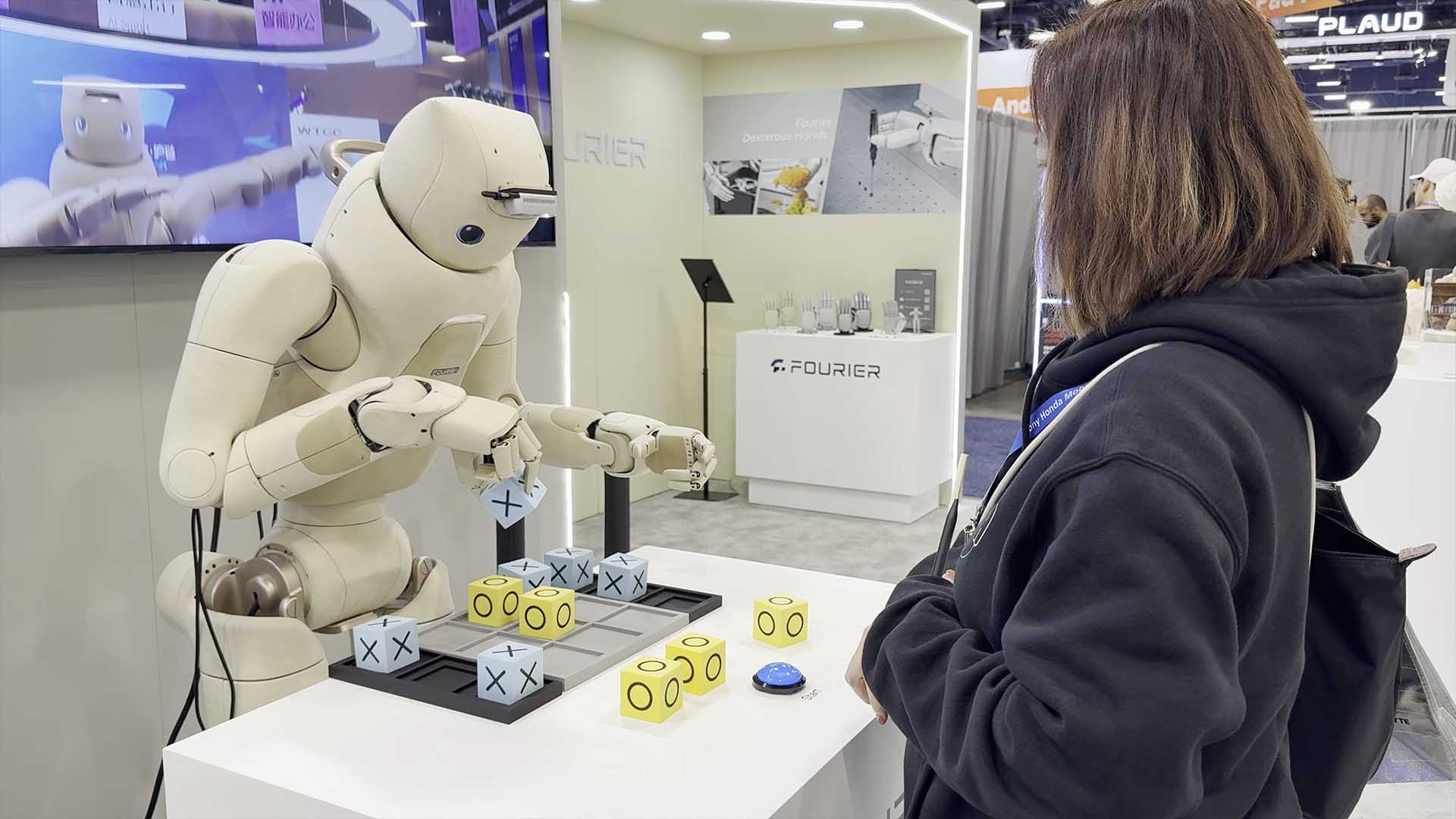
AI becomes tangible: CES 2026 showcased numerous applications where digital intelligence directly intervenes in physical processes and goes beyond pure software demonstrations.
Photo: Ulrich Buckenlei | Visoric 2026
For companies, this leads to a new guiding question. Not whether AI is used, but where it simplifies real work, reduces risks, and improves the quality of decisions. CES 2026 provided many indications that this transition is currently underway.
Simulation and digital twins as the new normal
A central theme of CES 2026 was the shift of testing and decision-making into virtual environments. Simulations make it possible to play through scenarios before real costs arise. Digital twins represent assets, products, or entire factories in a way that makes changes predictable.
The benefits are pragmatic. Saving time, detecting errors earlier, reducing risks. When simulation is used not only in development but also in operation, a continuous model emerges that accelerates decision-making.
- Faster development → Virtual tests shorten iteration cycles.
- Safer decisions → Risks become visible at an early stage.
- Better operations → Planning and maintenance become more precise.

Virtual preparation instead of real-world testing: Simulations and digital twins help secure decisions before they are implemented in reality.
Photo: Ulrich Buckenlei | Visoric 2026
Simulation is therefore no longer just an engineering tool, but a strategic foundation for planning and operations.
Physical AI and robotics between progress and limitations
Robotics was visibly present at CES 2026. However, the real insight was not found in show effects, but in the level of maturity. Systems appear more precise and versatile, yet still reveal limitations in speed and robustness.
- More precision → Fine motor skills are visibly improving.
- More learning → Systems are trained using data-driven approaches.
- More honesty → Limitations remain clearly visible.
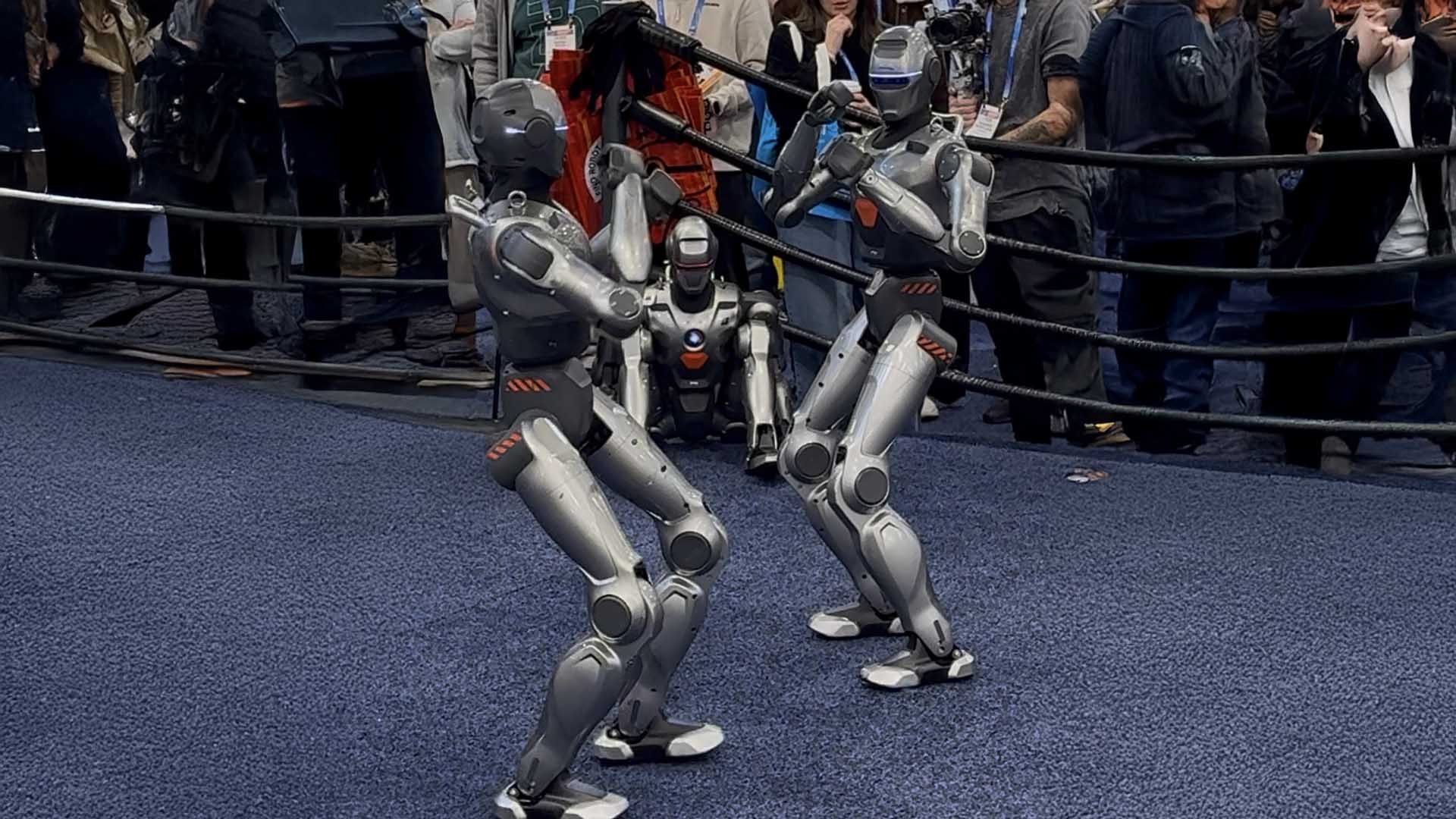
Robotics as Physical AI: CES 2026 showed progress, but also clear limitations that still exist today.
Photo: Ulrich Buckenlei | Visoric 2026
This transparency makes the current state of development realistically assessable and underscores the importance of training and simulation.
Extended Reality as an interface between humans and complexity
As complexity increases, so does the need for clarity. Extended Reality makes data and models spatially tangible and supports teams in making decisions within context.
- Better understanding → Spatial visualization creates context.
- Better alignment → Shared models instead of individual screens.
- Better decisions → Acting with a direct reference to reality.
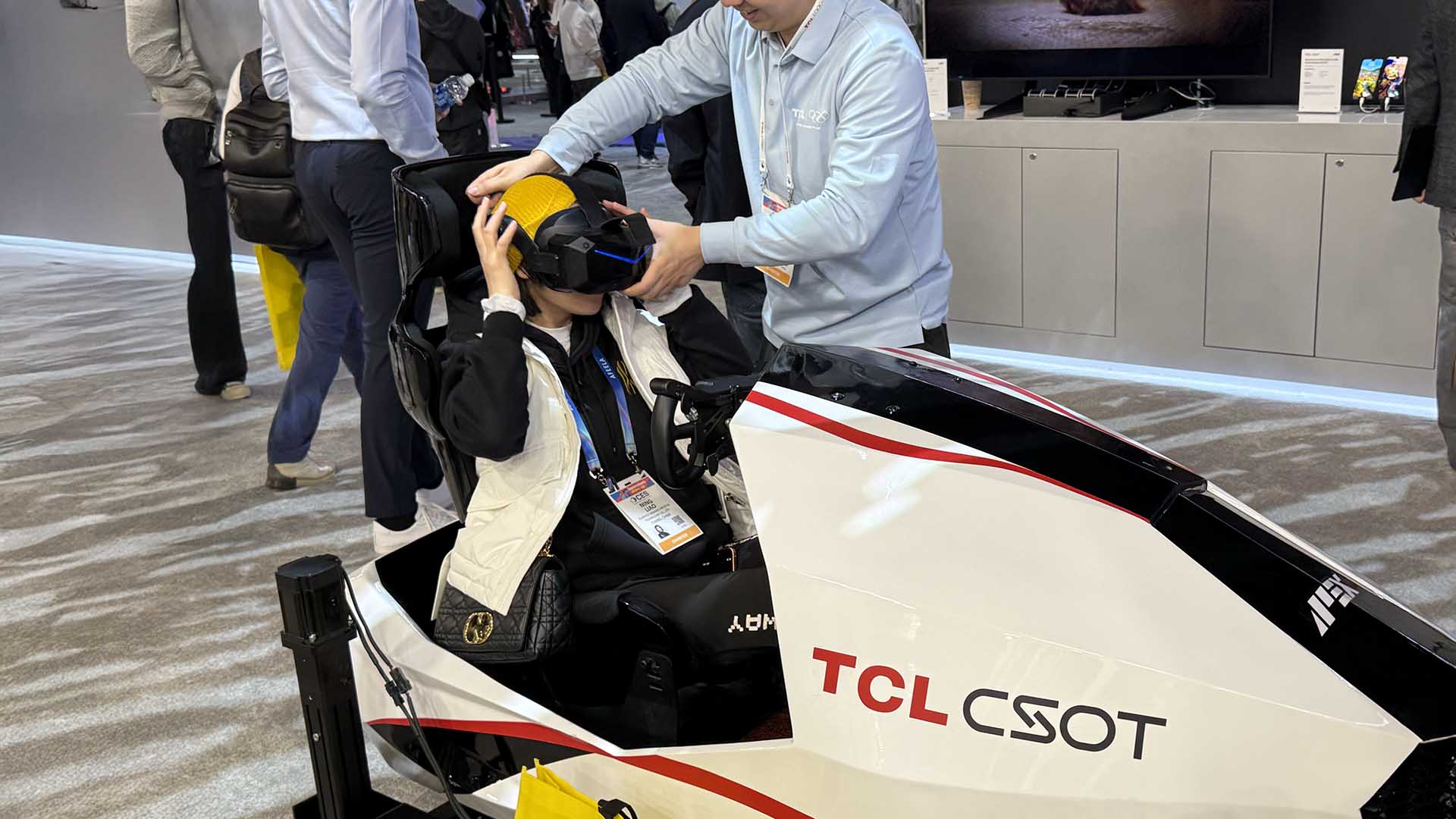
XR as a working tool: Spatial visualization supports the understanding of complex technical relationships.
Photo: Ulrich Buckenlei | Visoric 2026
Translating spatial 3D strategies from the CES perspective into practice
CES 2026 made it clear that spatial 3D technologies, simulation, and AI do not unfold their economic value through individual tools, but through clean data structures, end-to-end pipelines, and clear strategic integration. This is exactly where the Visoric expert team from Munich positions itself, at the intersection of technology, process, and organization.
For many years, Visoric has supported companies in transforming complex CAD and process data into scalable, spatially usable systems. The focus is not on short-term effects, but on sustainable solutions that can be integrated into existing value chains and deliver long-term impact.
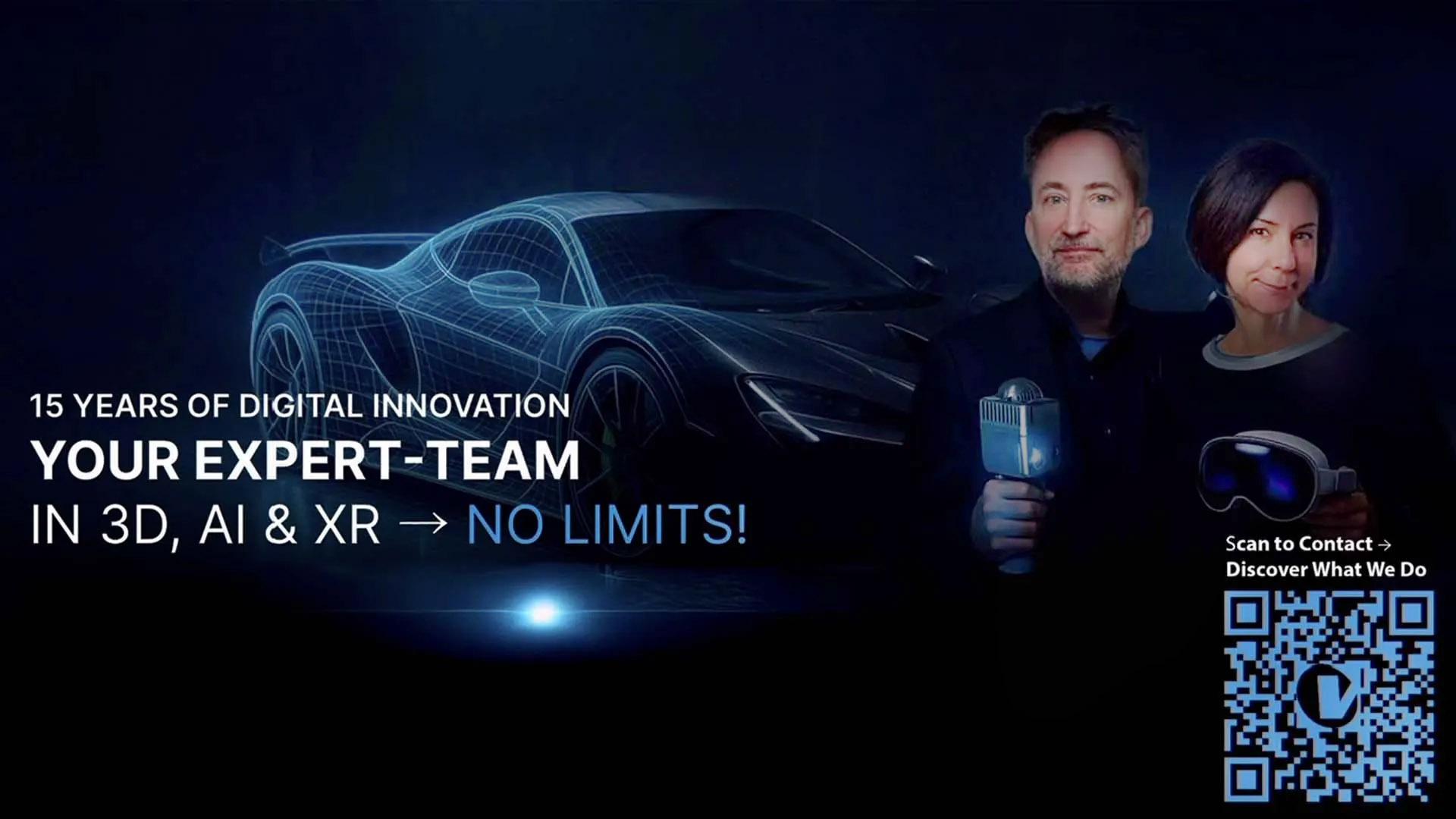
The VISORIC expert team: Ulrich Buckenlei and Nataliya Daniltseva discussing spatial 3D strategies, AI-supported processes, and future industrial application scenarios.
Source: VISORIC GmbH | Munich 2025
The scope of services deliberately extends beyond classical visualization. Visoric supports companies across the entire value chain of spatial 3D applications, from analyzing existing data landscapes and building technical pipelines to productive use in development, training, service, and communication.
- Strategic conception of spatial 3D and mixed reality workflows based on existing CAD data.
- Development of prototypes and proof-of-concepts for rapid evaluation of technological and organizational feasibility.
- Building scalable software solutions for industrial, service-oriented, and communication-focused applications.
- Integration of real-time 3D, mixed reality, and industrial AI into existing processes.
- Cross-platform use of 3D assets across headsets, web, desktop, and mobile devices.
Whether it is 1:1 scale design reviews, simulation-based decision processes, immersive training scenarios, or consistent product communication, what matters is a stable technical and organizational foundation. Visoric contributes this experience and supports companies in not only introducing spatial 3D technologies, but anchoring them in a sustainable and effective way.
If you would like to explore how the developments around spatial 3D data, simulation, and AI visible at CES 2026 can be meaningfully transferred to your organization, a conversation with the Visoric expert team provides a solid foundation for the next steps.
Contact Persons:
Ulrich Buckenlei (Creative Director)
Mobile: +49 152 53532871
Email: ulrich.buckenlei@visoric.com
Nataliya Daniltseva (Project Manager)
Mobile: +49 176 72805705
Email: nataliya.daniltseva@visoric.com
Address:
VISORIC GmbH
Bayerstraße 13
D-80335 Munich